Bedrock Menus
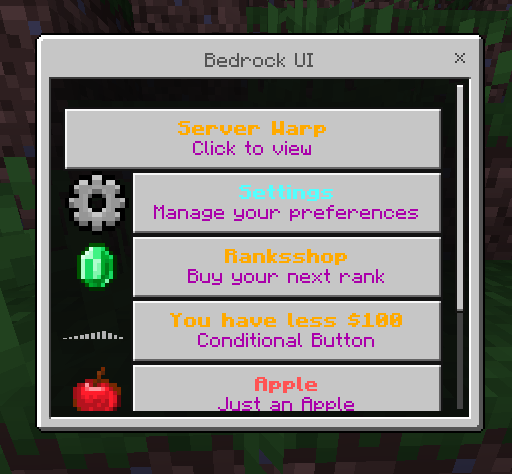
FioMenu keeps Bedrock menus in a separate folder: bedrock_fio_menus/. These files are form-driven rather than inventory-grid driven.
How Java menus route to Bedrock menus
The Java menu examples use:
menu:
  bedrock: "example"
or:
menu:
  bedrock: "settings"
That id points to a file in bedrock_fio_menus/<id>.yml, allowing one feature to have a Java layout and a Bedrock form layout at the same time.
Core Bedrock menu structure
The bundled examples use:
menu:
  type: "FLOODGATE"
  form: "SIMPLE"
The source comments list supported form types:
SIMPLECUSTOMMODAL
Main sections used by the source
Bedrock menu files use these top-level areas:
menupriorityform
priority controls button order, and form contains the actual button or rule entries.
Bedrock button structure
The current examples use this shape:
form:
  'Settings_Button':
    button:
      line1:
      line2:
    image:
      type:
      url:
    actions:
      any:
Image source modes documented in the YAML comments:
NONECUSTOMPATH
Conditional Bedrock buttons
bedrock_fio_menus/example.yml shows that Bedrock entries can use numbered rules just like Java menus:
'Advance':
  rules0:
  rules1:
That means button text, image, and actions can all change depending on placeholders or other rule results.
Bedrock settings flow
bedrock_fio_menus/settings.yml is a good practical reference because it shows repeated toggle logic for:
- private messages
- AFK
- teleport requests
- pay access
Each button swaps between two states through rules0 and rules1, then reopens the linked settings flow after the command runs.
Action style
The Bedrock files use the same bracketed action format as the Java menu files, including:
[OPEN_MENU][PLAYER][MESSAGE][SOUND][CLOSE]
That consistency is important when documenting or editing both menu families together.
When to use Bedrock forms instead of Java menus
Use the Bedrock folder when the target experience must be friendly to Floodgate or Geyser users and you want:
- button-first navigation
- text and image-based entries
- modal or custom form input flow
- a dedicated Bedrock experience instead of forcing an inventory GUI concept